Portofiro Loathing in La Luz
One of the earliest revelations Zero Parades delivers is deeply personal: I am, by almost every measurable standard, a complete disaster. A walking omen of bad luck with cropped hair, sharp cheekbones, and a long history of mistakes. Before being locked away in cryogenic limbo, I was apparently one of the Opera’s finest operatives. That version of me belongs to the past. The fallen veteran spy clawing their way toward redemption is hardly a new archetype, but when handled with this level of care, it remains endlessly compelling.
The life of a field agent is shaped by countless tiny successes and failures. Every operation hangs on an unstable mixture of expertise, coincidence, instinct, and pure chaos. Eventually, one bad decision sets off a chain reaction, and every carefully arranged domino falls in exactly the wrong direction. That is the story of Cascade, the operative I guided through Zero Parades. She stared directly at her failures and convinced herself that luck, timing, and fate might finally align in her favour.
They never did.
Zero Parades: For Dead Spies Review
Developer: ZA/UM
Publisher: ZA/UM
Platform: Reviewed on PC
Availability: Released May 21 on PC via Steam, Epic Games Store, and GOG. PlayStation 5 version planned for 2026.
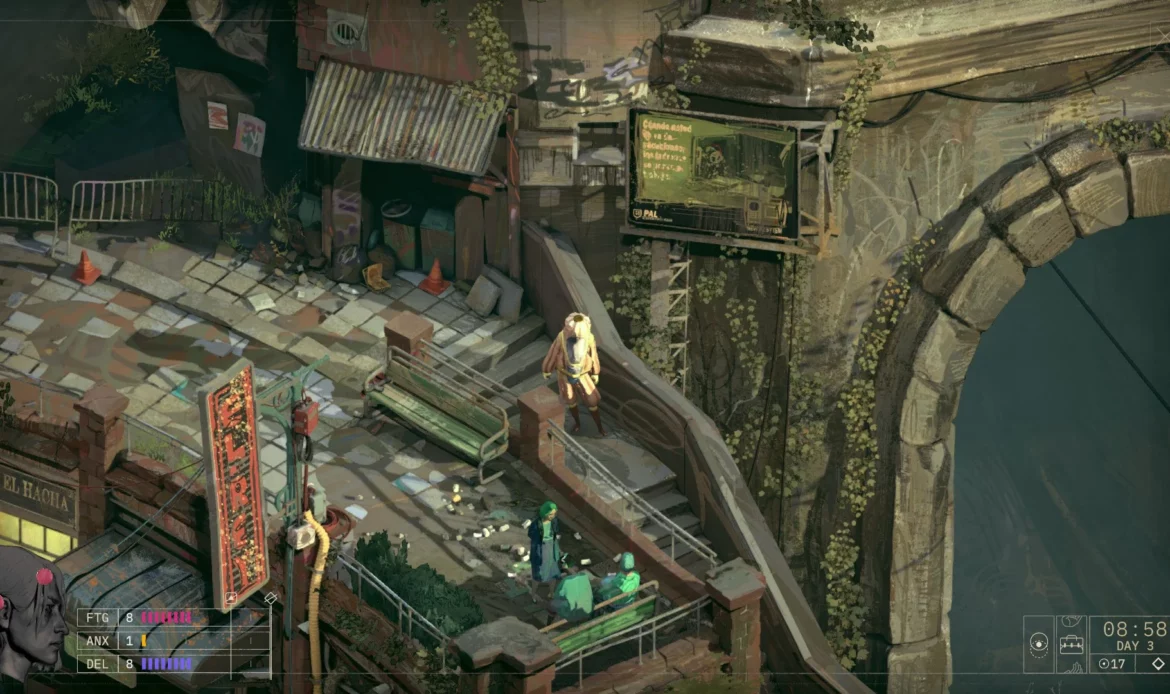
As Cascade, I spend much of my time wandering through the winding streets and neglected alleyways of Portofiro, salvaging half-smoked cigarettes from rubbish bins and moving with the oddly energetic stride of someone desperate to rebuild a ruined reputation. There is something almost manic about her. She carries the restless momentum of a highly trained operative who has spent five years trapped in “the freezer,” endlessly replaying every mistake she ever made.
The Opera sends me here to meet my new partner.
I find him unconscious, missing his trousers, and completely incapable of explaining anything about the mission.
My only useful contact appears to be a shopkeeper who feels suspiciously like an alternate-universe version of Olivia Colman. Her first request is not intelligence gathering, espionage, or infiltration.
She wants me to repair a fax machine.
It’s good to be back in the field.
Zero Parades: For Dead Spies marks the second release from the current incarnation of ZA/UM following the famously calm and completely controversy-free Disco Elysium. Like its predecessor, it is a deeply text-heavy RPG built around dice rolls, character development, and an extraordinary amount of player choice.
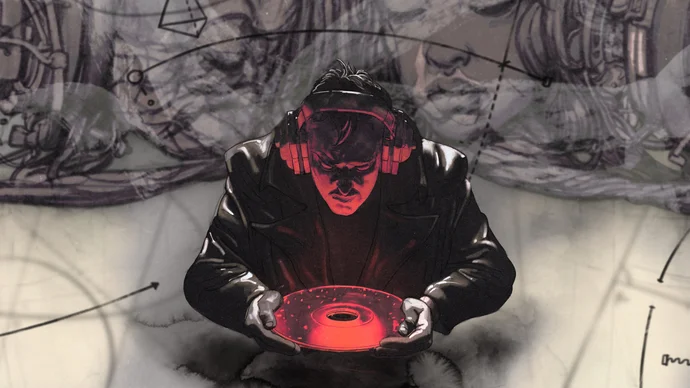
The game’s conditioning system initially struck me with the force of a medieval peasant seeing a printed pamphlet for the first time. There is an overwhelming amount of information to absorb.
Starting from scratch, I opted for a custom character build and, without much thought, invested heavily into the Faculty of Relation category. I hoped attributes such as Personalism and Nerve would smooth my path through conversations and social encounters.
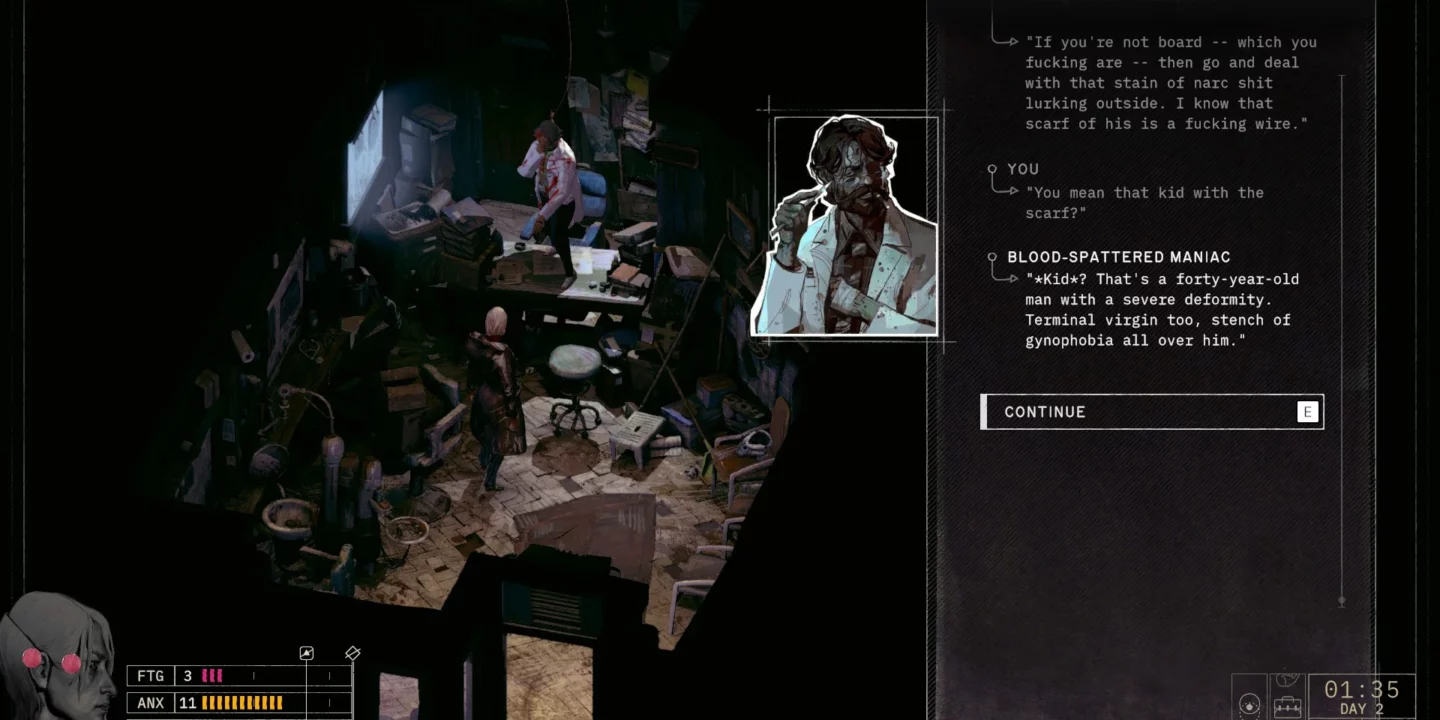
Whenever I encountered dialogue checks tied to specific skills—Grey Matter for intellect, Entanglement for intuition, and so on—I could push myself beyond my limits by adding additional dice to the roll. Success required favourable numbers.
Failure happened often.
To cope, I leaned heavily on coffee, alcohol, and cigarettes, all of which influence Cascade’s internal balancing act between Fatigue, Anxiety, and Delirium. These systems possess both soft and hard limits. Reach a breaking point and you’re forced to lower related skills, a permanent reminder of your recklessness.
White checks can be retried later, either through time passing or skill improvement.
Red checks offer no second chances.
Fail once, and the opportunity vanishes forever.
Like tears in rain.
I find myself in Quisach, a region that once represented a modest but authentic Portofiran identity. Formerly a penal colony of the fascist empire of La Luz, it now drowns beneath waves of imported products and cheap imitations of those same imports.
Portofiro has become fertile ground for exploitation.
Naturally, the people doing the exploiting are its former colonial rulers, whose secret police force—the Weeping Eye—maintains a suffocating influence over the city.
Into this sea of plastic, consumerism, and cultural fragmentation I dive headfirst.
The city offers a feast of obsessions and contradictions. Conspiracy theorists linger on street corners. Dubious narcotics circulate freely. A never-ending community phone-sex hotline somehow becomes an important landmark. There are cursed stories about cosmonauts, feral boars, social media influencers, and moments where reality itself appears to crack open.
Portofiro is chaotic, fractured, and endlessly fascinating.
Yet beneath all of that noise lies my true purpose.
I must uncover the details of my mission and determine what happened to my former team—the Whole Sick Crew—whom I abandoned in this very city years ago.
Exploration rewards curiosity through the Thought system.
Specific interactions unlock ideas, philosophies, and obsessions that Cascade can internalize as part of her conditioning. Up to nine thoughts can be equipped simultaneously, each offering unique advantages alongside thematic penalties.
One example is “Latest Synthetic Desires,” which I acquired after becoming distracted by an extremely attractive coffee advertisement.
Relatable.
This thought increases the potential ceiling of my Instincts skill while reducing fatigue whenever I consume canned coffee. However, purchasing counterfeit goods suppresses the thought entirely for twelve in-game hours.
Given Portofiro’s economy—and Cascade’s poverty—avoiding counterfeit products is nearly impossible.
That tension forms one of the game’s strongest thematic foundations.
Zero Parades possesses an astonishingly sharp understanding of bootlegging, imitation, and consumer culture.
It is clearly written by people who instinctively understand how a counterfeit anime alarm clock discovered at a flea market can simultaneously belong to multiple cultures, and what that reveals about identity, aspiration, and belonging.
Portofiro is saturated with postcolonial conflict.
Media, fashion, language, and aesthetics continuously flow from La Luz into the city, shaping local culture in ways both subtle and profound.
Calling La Luz a direct stand-in for America would oversimplify matters, but anyone who has spent meaningful time outside the gravitational pull of empire will instantly recognize the dynamic.
An empire exists here.
To some, it is a technofascist regime.
To others, it is the pinnacle of civilization.
Either way, it deliberately exports its imagery and ideals across the globe.
Its celebrities, brands, entertainment, and cultural symbols become aspirations.
People want the lives they represent.
They want the products.
They want the status.
They want to become someone else.
Tomio, a weary janitor employed by the Housing Campaign, struggles to understand this phenomenon. He laments the growing divide between himself and his son, whose obsession with Luzian fashion and identity has created an emotional gulf neither knows how to bridge.
As the game repeatedly suggests, desire itself cannot be conquered.
Especially when that desire is manufactured and distributed by the most powerful culture on the planet.
And wherever desire exists, bootlegging follows.
I previously discussed the Bootleg Bazaar and the game’s fascination with material nostalgia during my time with the demo.
The full release expands these themes dramatically.
Growing up in Southeast Asia, I bought one-dollar VCDs from fading plastic bins and spent hard-earned summer job money on counterfeit designer accessories. One fake Louis Vuitton x Julie Verhoeven bag became a prized possession after I encountered Verhoeven’s artwork in imported fashion magazines that cost absurd amounts of money where I lived.
That bag was my personal treasure.
And it was undeniably fake.
Portofiro understands that experience perfectly.
To say the game’s exploration of postcolonial identity resonated with me would be an understatement.
As Cascade, an aging operative struggling to remain relevant, bridging generational divides often requires adopting the aesthetics of La Luz.
At one point I need information from two particularly cruel teenagers.
They refuse to engage with me while I’m dressed unfashionably.
Unfortunately, everything I own qualifies as unfashionable.
Including a giant mascot head belonging to a pelota character named Mr. Baby Tofu.
The game’s examination of aesthetics goes far beyond the familiar arguments presented in films like The Devil Wears Prada.
Zero Parades explores how trends spread beyond imperial centres, transforming as they travel.
Each replication introduces imperfections.
Each imitation absorbs local influences.
The result becomes something entirely new—a strange cousin of the original.
It captures the uniquely frustrating experience of growing up immersed in another culture’s fantasies while watching that culture remain almost entirely unaware of your existence.
The beginning of the war will be secret.
That line, borrowed from Jenny Holzer and used as the game’s epigraph, feels entirely appropriate.
Holzer’s work often blurred the boundaries between political messaging, public art, consumer culture, and commercial products. Her slogans appeared on posters, benches, public infrastructure, and eventually merchandise.
The connection to Zero Parades is obvious.
The game understands how politics, advertising, identity, and consumption become inseparable.
What Zero Parades does exceptionally well is constantly force players to interrogate their own desires.
Not just what Cascade wants.
What I want.
Every decision reflects competing impulses and conflicting values.
Every failure becomes a negotiation between ideology and temptation.
The game repeatedly asks difficult questions.
Why do we desire certain things?
Who taught us to desire them?
And what happens when we finally get them?
Meanwhile, Cascade’s immediate needs remain far more practical.
She needs disguises.
She needs information.
She needs money.
She needs to survive.
I spend hours rummaging through discarded objects, collecting bits of plastic, handling trinkets, and interacting with seemingly insignificant details.
One collectible wolf cup becomes important enough that I eventually melt it into a toxic puddle for ideological reasons.
I peel protective plastic from public devices.
I repeatedly press a dolphin logo on a public payphone because doing so reduces Anxiety.
The act grants an actual gameplay buff.
It’s absurd.
It’s brilliant.
Through these tiny interactions, the game remains intensely focused on humanity’s relationship with mass-produced culture.
And mass-produced culture, as everyone knows, would not exist in its current form without imitation and piracy.
Running through Portofiro dressed in increasingly ridiculous outfits, I constantly feel tempted to roll just one more set of dice.
The temptation becomes addictive.
By the middle and late portions of the game, Delirium accumulates faster than I can control it.
Even though sleep resets my internal pressures, a single unlucky roll can undo hours of careful management.
Some of my most devastating failures occurred during supposedly easy checks.
The game informed me that success was almost guaranteed.
Then I rolled disastrously and watched Anxiety spiral out of control.
Managing Cascade’s mental state becomes its own form of gambling.
And like all effective gambling systems, it always promises redemption on the next attempt.
That promise drives the entire experience.
When the game enters its freeze-time decision sequences—moments where Cascade must make critical choices under immense pressure—the tension becomes extraordinary.

Strange, surreal imagery fills the screen.
Neo-medieval illustrations collide with modern street-art aesthetics.
Former allies become threats.
Enemies become uncertainties.
These sequences inject sudden bursts of high-stakes espionage into the otherwise methodical pace of investigation and conversation.
They are unforgettable.
As the story progressed, I remained committed to Cascade’s original psychological makeup.
I treated her thoughts less like optimization tools and more like genuine obsessions.
Although the system offers incredible opportunities for min-maxing and character specialization, I preferred roleplaying her flaws.
That flexibility remains one of the game’s greatest strengths.
Players can build specialists focused on wealth, technology, social influence, or countless other approaches.
But mechanics alone are not what make Zero Parades remarkable.
Its true achievement lies in its extraordinary reactivity.
Every character, every conversation, every subplot contributes to a world that feels genuinely alive.
I adapted constantly.
Changing outfits.
Swapping tools.
Making sacrifices.
Punching investment bankers monopolizing public phone-sex services.
Normal RPG activities.
The game consistently surprised me.
Sometimes it leaned into sentimentality.
Other times it delivered genuine heartbreak.
Many of the most powerful narrative moments remain impossible to discuss without spoiling them.
The Opera would probably freeze me again.
What I can say is this:
Zero Parades offers one of the most compelling examinations of material culture, nostalgia, imitation, and consumer desire that I have encountered in any video game.
It explores reruns, photocopies, substitutes, outdated technology, bootlegs, and inherited cultural identities with extraordinary intelligence.
It understands what it means to speak the language of empire while forever sounding slightly foreign.
And it understands how capitalism transforms all of this into something profitable.
I haven’t even touched on the exceptional voice acting, sound design, music, or visual direction.
Together they represent a creative team operating at the absolute height of its powers.
Zero Parades is messy, painful, funny, tragic, absurd, and deeply human.
It transforms familiar experiences into something strange and revelatory.
A beautifully crafted examination of desire, shame, culture, and identity.
A game made with incredible care.
And one that feels perfectly designed for the strangest people among us.