3, 2, 1… Time to Hit the Road Across Japan
Playground Games has done it once again. Acting simultaneously as an expert instructor and an exceptional tour guide, the studio takes everything it has learned throughout fourteen years of Forza Horizon history and applies those lessons with confidence, style, and remarkable precision.
Forza Horizon 6 doesn’t attempt to reinvent the formula. Quite simply, it doesn’t need to. Instead of tearing everything down and starting over, Playground Games has carefully examined the strengths and weaknesses of the previous five entries, trimming away unnecessary elements while bringing back some of the series’ strongest ideas. The result is a cleaner, more focused, and more engaging racing experience than ever before. Combined with a breathtaking Japanese setting and a deep appreciation for the country’s rich automotive heritage, Horizon 6 stands as one of the finest racing games ever created. It feels like the culmination of everything the series has been building toward since its debut.
That said, being the best racing franchise in gaming comes with a few qualifications.
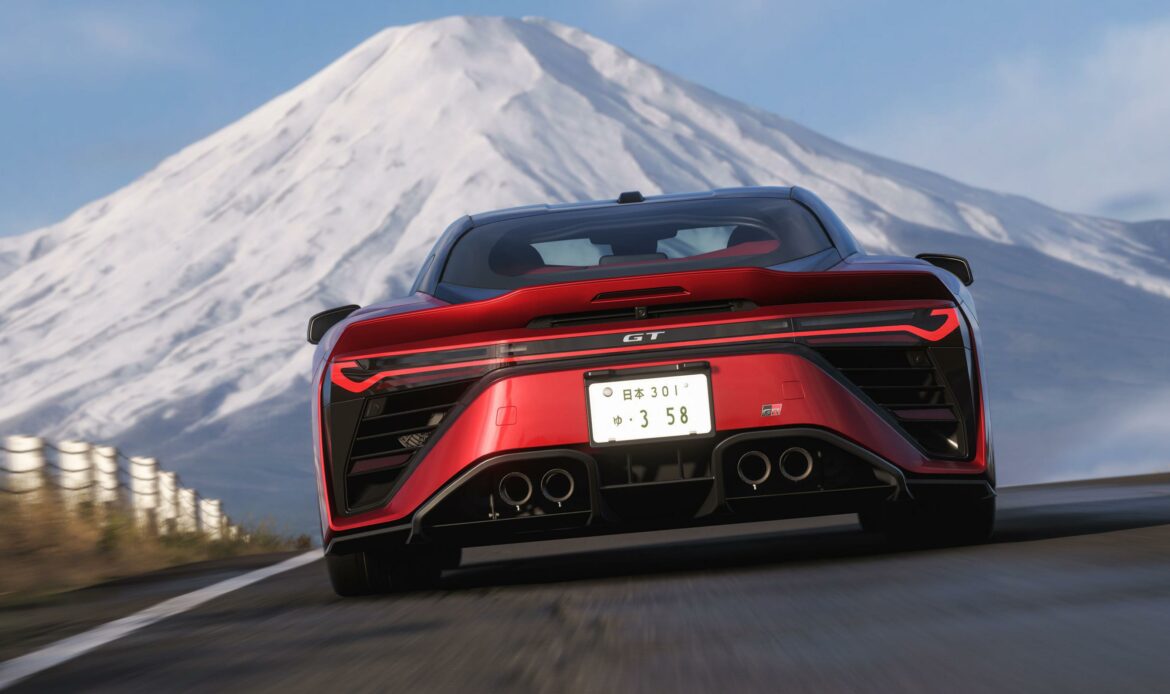
Forza Horizon 6 Review
Developer: Playground Games
Publisher: Xbox Game Studios
Platform: Reviewed on Xbox Series X
Availability: Released May 19 on PC (Steam and Microsoft Store) and Xbox Series X/S. PlayStation 5 version scheduled for 2026.
Let’s begin with the most complicated topic: progression.
Creating a satisfying sense of advancement in an open-world racing game has always been difficult. The Horizon series has traditionally promised players a massive sandbox packed with activities that can be completed in any order. Want to break every traffic law imaginable while chasing three stars in a Speed Camera challenge? Go ahead. Prefer heading north into Hokkaido to tackle snowy cross-country races against fifteen other competitors? That’s available too.
Perhaps you’d rather spend your time exploring the sunflower fields surrounding Akeno, searching for collectible experience boards and hidden mascots. Or maybe you want to slide an iconic Nissan Skyline GT-R through Tokyo’s streets while competing in drifting events. The freedom to approach the game however you choose has always been part of Horizon’s appeal.
In Horizon 6, however, that freedom is structured more intelligently than ever.
One of the smartest design decisions Playground has made is bringing back the Wristband progression system from the original Forza Horizon set in Colorado. Players now work through seven different wristband tiers, each unlocking new opportunities and challenges. At the very top sits the coveted Gold Wristband, granting access to everything the festival has to offer.
It’s an excellent system.
Each new wristband introduces races with higher-performance vehicle requirements, while previously explored areas gain fresh activities and challenges. As your skills improve, the game naturally begins presenting more Road Racing, Dirt Racing, and Cross Country events. Individual activities often revolve around specific vehicle categories, and some prove significantly more demanding than others when it comes to securing a podium finish.
Progression is fueled by Acclaim, earned through nearly every activity imaginable. Winning races, simply completing races, photographing featured vehicles, and generally participating enthusiastically in festival life all contribute toward unlocking the next wristband.
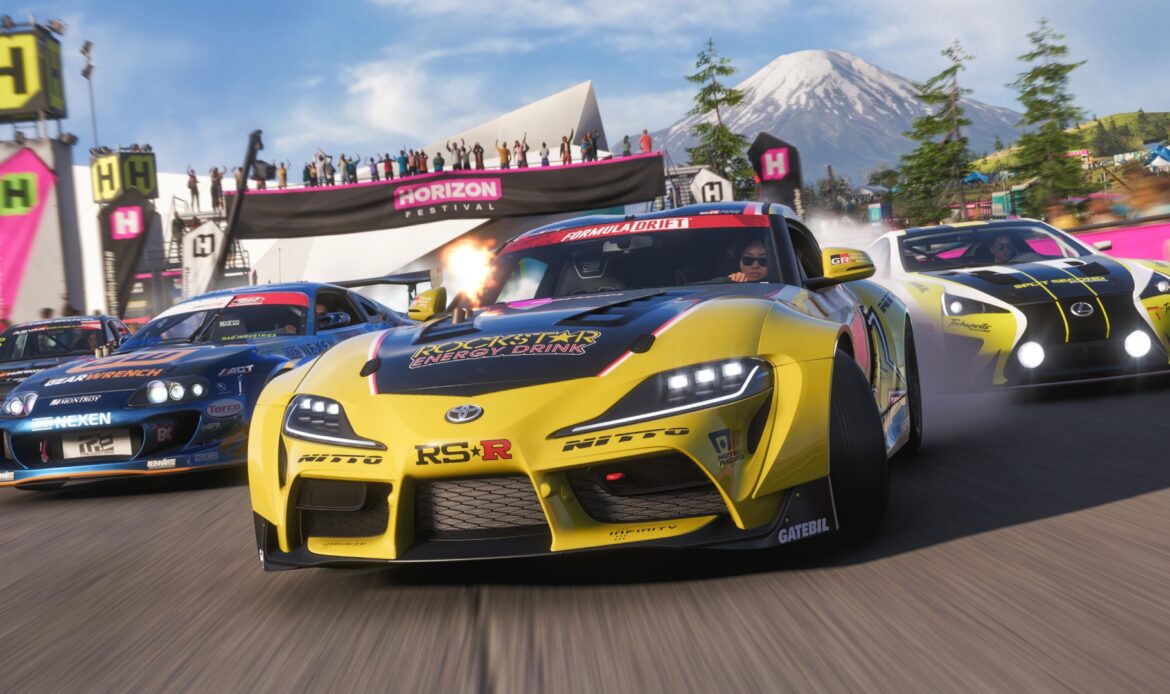
Once you qualify, you gain access to Showcase Events.
Remarkably, six games into the series, these elaborate spectacles continue to impress.
I’ll avoid spoiling most of them, but one standout deserves mention: the mech race.
After Horizon 5 featured wingsuit daredevils, cargo aircraft, and canyon-spanning races, it seemed difficult to raise the bar further. Yet setting Horizon 6 in Japan practically guaranteed giant robots and anime-inspired moments would appear somewhere. The resulting showcase is absurd, unrealistic, and gloriously entertaining. It embraces pure spectacle without apology.
The only downside involves the Horizon hosts themselves. The influencer-style personalities delivering endless commentary often become irritating rather than engaging. Thankfully, the game allows players to disable NPC dialogue entirely through the settings menu.
Trust me, it’s worth doing.
Running alongside the Wristband progression system is another track called Discover Japan.
This system functions as a celebration of the country itself, encouraging players to visit every corner of the map while unlocking additional activities. Progress is measured through stamps, earned by participating in a wide variety of tasks. Collecting and customizing vehicles, photographing murals, smashing mascots, discovering landmarks, completing Street Races and Touge events, and even taking on part-time jobs all contribute toward your next stamp.
Yes, part-time jobs.
Really.
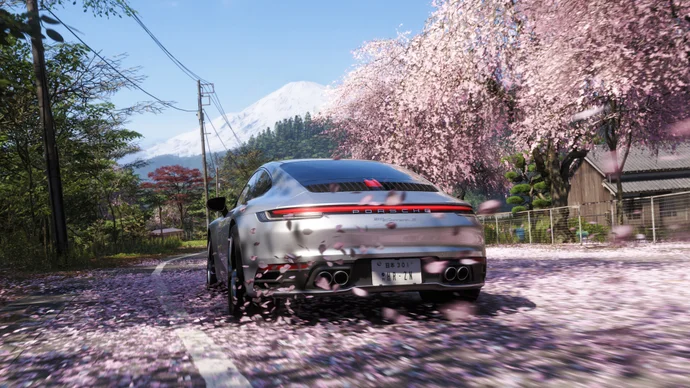
As a counterbalance to all the high-speed racing and fuel consumption, Horizon 6 introduces delivery missions as an optional side activity. These jobs don’t dramatically alter the experience, but they do offer a more relaxed way to explore Japan’s narrow streets and densely packed urban environments.
Personally, I found them among the least interesting activities in the entire game.
The beauty of Horizon, however, is that participation is entirely optional. I completed a handful of deliveries and then ignored them completely. The game never punished me for doing so.
That freedom is one of Horizon 6’s greatest achievements.
Playground Games has spent years trying to balance structured progression with player agency. Since Horizon 3, the studio has been walking a delicate line between guiding players and letting them create their own experience. Here, thanks to the enormous map size and overwhelming amount of content, that balance finally feels perfect.
The dual progression systems gently encourage exploration without ever feeling restrictive. The game constantly teaches and guides players, yet rarely makes that guidance obvious.
It’s a remarkably elegant solution.
Because Horizon 6 offers such a wide variety of activities, I naturally gravitated toward some race types more than others.
Wet grass dirt races remain frustrating. High-performance supercar races on ultra-smooth roads often lack excitement. Mixed-surface events that constantly transition between asphalt and dirt can occasionally become overwhelming.
I typically race on Above Average difficulty, yet Horizon 6 frequently surprised me. Some events encouraged me to lower the difficulty to Novice, while others suggested increasing it to Highly Skilled. In previous Horizon games, I could comfortably remain on a single difficulty setting throughout the entire campaign.
That’s no longer the case.
The variety of race categories and vehicle classes is so extensive that each wristband level genuinely feels like a new lesson. The game continually challenges players to develop new skills and adapt to unfamiliar situations.
Earlier, I described the driving model as merely “fine,” but that may actually be underselling it.
Horizon will never offer the same simulation depth as Gran Turismo or its sibling series, Forza Motorsport. Yet for an open-world racing game, its handling model strikes an impressive balance between accessibility and authenticity.
I’m not an expert racing game player. I have no desire to become one.
What Horizon has always done exceptionally well is teach players enough about driving mechanics to feel competent and successful. Over the years, the series has gradually developed my understanding of racing games to the point where I can comfortably complete the campaign and even compete effectively in online races.
The fact that its physics system supports road racing, dirt tracks, snowy mountain courses, beach circuits, and countless other scenarios while accurately accommodating a roster of 671 vehicles deserves significant praise.
Like previous entries, Horizon 6 is just as much about collecting cars as it is about racing them.
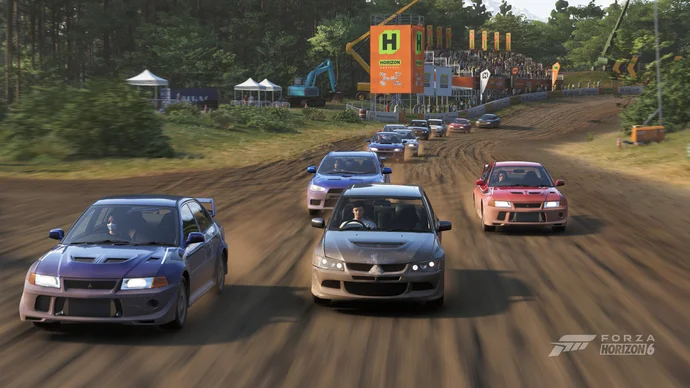
Early in my playthrough, I became completely obsessed with a 1992 Ford Escort RS Cosworth. This legendary World Rally Championship machine, instantly recognizable thanks to its iconic whale-tail spoiler, inspired me to finally engage with the game’s tuning and upgrade systems.
Historically, I avoided those menus entirely.
Fortunately, Playground has dramatically improved the user interface since the Horizon 4 era. Combined with the Xbox Series X’s SSD, making adjustments, returning to the garage, testing changes, and refining setups becomes an incredibly smooth process.
Experimentation feels effortless.
Back during the PlayStation 3 generation and games like Gran Turismo 5, this kind of trial-and-error tuning would have consumed entire afternoons.
Because I played before launch, I wasn’t able to experience the game with fully populated public servers. However, I did encounter other reviewers as well as developers from Playground Games and Turn 10 Studios.
To my surprise, I occasionally managed to beat some of them.
More often than not, though, I found myself racing against Drivatars, many of which displayed an alarming level of aggression. Still, they provided a welcome challenge and frequently pushed me harder than expected.
When real players do appear, Horizon 6’s networking technology shines.
The transition from casually driving alongside another player to suddenly participating in cooperative activities or heading toward a race together remains astonishingly seamless. Even after all these years, it still feels like magic.
The original Horizon concept was inspired by Turn 10 creative director Dan Greenawalt’s experiences attending music festivals such as Coachella.
That festival atmosphere remains central to the experience.
Six entries later, the sense of community is stronger than ever. I found myself forming connections with complete strangers simply through shared moments on Japan’s roads, much like meeting people while waiting in festival queues or wandering between stages at a live event.
Forza Horizon has always existed somewhere between arcade racing and simulation.
At times throughout its history, that balance has shifted too far in one direction or the other. Here, however, Playground Games appears completely confident in its identity.
Set against the backdrop of Japan, Horizon 6 combines momentum, polish, and experience into a package that feels effortlessly refined. It successfully caters to casual players while still offering enough depth for dedicated enthusiasts. It amplifies the fun factor while simultaneously improving some of the series’ most intricate systems.
The Japanese setting arrives at exactly the right moment.
It serves as the perfect companion to a game that feels beautiful, thoughtful, and mature.
It may have taken fourteen years to reach this point, but Forza Horizon 6 finally fulfills the ambitions first hinted at back in October 2012.
And in doing so, it delivers the strongest entry the series has ever seen