The First Step Toward a Shared Digital Economy.
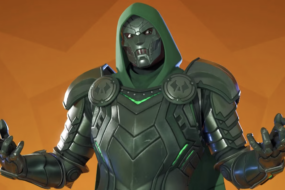
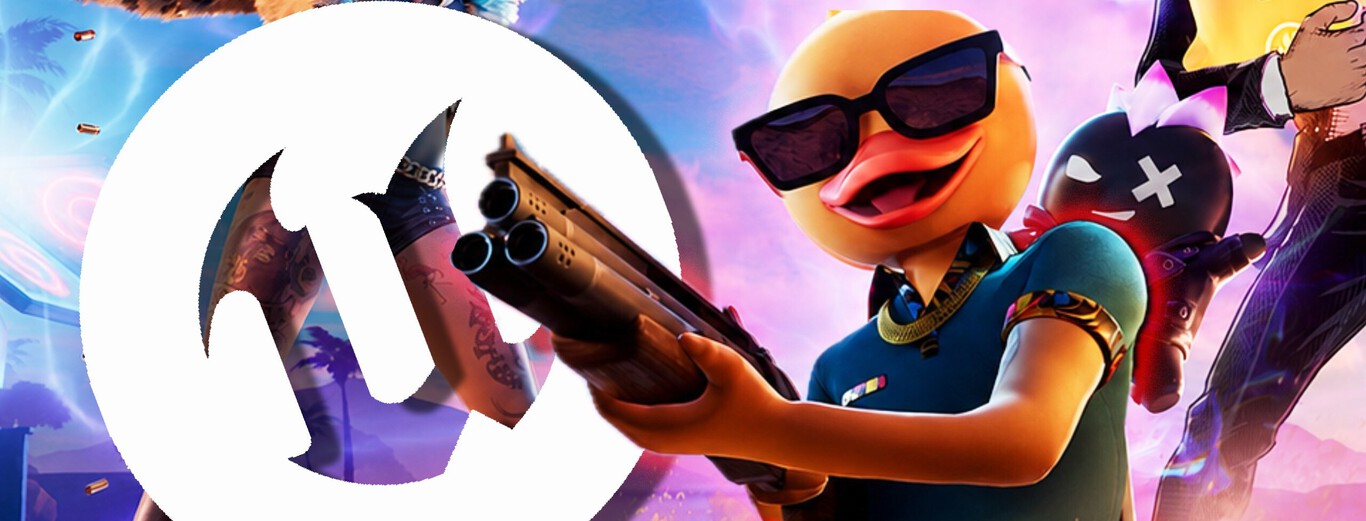
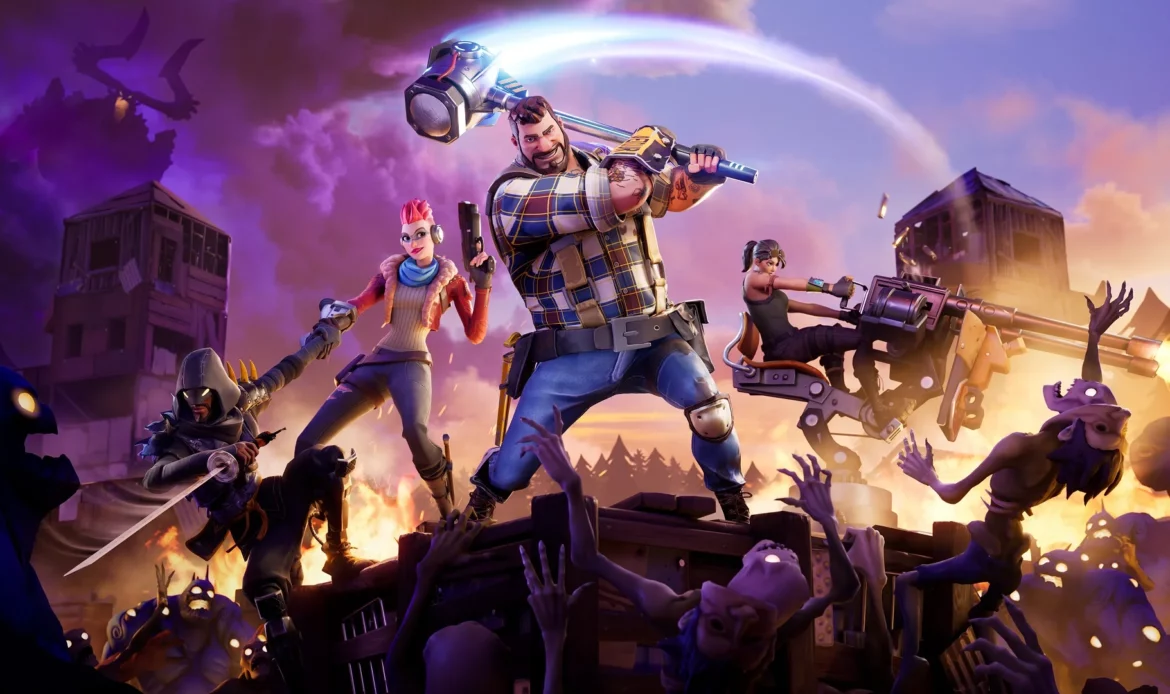
Epic Games has offered an early glimpse at some of the ideas shaping Unreal Engine 6, and one of the most intriguing concepts involves allowing players to carry cosmetic items between Fortnite and other games built using Epic’s technology.
The proposal was outlined by Epic Games development lead Marcus Wassmer during the company’s latest State of Unreal presentation. According to comments later shared in an official transcript, Epic’s long-term vision centres around making content and systems far more portable across projects and platforms.
“Content and code should be portable across games and engines,” Wassmer explained. “Our goal is to give the games industry a whole new way to grow our ecosystems with cross-promotion, portable player value, and to really lean into all of the positive-sum dynamics that Metcalfe’s Law predicts for connecting experiences and social graphs together.”

In simpler terms, Epic wants digital purchases and player-created value to become more useful across multiple gaming experiences rather than remaining locked inside a single title.
Fortnite cosmetics will serve as the company’s first major test case.
According to Wassmer, Epic plans to move Fortnite’s cosmetic infrastructure into an open Unreal Engine 6 module. Developers using the engine would then have the option of recognising a player’s existing Fortnite cosmetic collection inside their own projects.
At the same time, developers could create original cosmetic items for their own games that are also compatible with Fortnite.
“Fortnite cosmetics will be our first real proof point of portability,” Wassmer said. “We will start by moving the base system to an open UE6 module. This means you’ll have the option to use a player’s entitled Fortnite outfits in your own games, and you’ll get the tools to build outfits for your own games that work inside Fortnite.”
Given Fortnite’s enormous player base and mature ecosystem, it provides Epic with an ideal environment for testing whether such a system can function at scale.
Epic views the initiative as far more than a Fortnite-specific feature.
“We see this as the first step toward building a shared economy for smart assets: functional assets with logic and functionality that work across games, to recognise players’ time and spending in a better way,” Wassmer added.
The broader goal is to establish a framework where digital items maintain value across multiple experiences rather than existing in isolation.
“In the end, this isn’t really a Fortnite story,” he continued. “It’s about proving that such a mature, complex system can work at scale — and that every game that works with these systems will immediately benefit from them.”
While the concept is ambitious, players should not expect to see it anytime soon.
Unreal Engine 6 remains years away from release. Epic currently expects early access testing to begin sometime around the end of 2027, though company representatives repeatedly stressed that the timeline remains flexible. A full launch is expected roughly 12 to 18 months after that initial testing phase.
Beyond cosmetic portability, Epic also highlighted several other major priorities for the next generation of Unreal Engine.
One of the most notable additions is deeper integration of generative AI and large language models, building on technology that has already begun appearing in Unreal Engine 5.8.
The company is also aiming to dramatically increase multiplayer scalability. During the presentation, Epic Games CEO Tim Sweeney discussed the possibility of future experiences supporting thousands, hundreds of thousands, or even millions of players simultaneously under the right circumstances.
Interestingly, much of the discussion surrounding Unreal Engine 6 focused less on visual fidelity and graphical breakthroughs than on practical development improvements.
A major objective appears to be making it easier for developers to build games that work seamlessly across multiple platforms without requiring extensive redevelopment or platform-specific rework.
Rather than chasing flashy technical showcases alone, Epic seems determined to streamline the process of creating, maintaining, and expanding large-scale game ecosystems.
“UE6 is going to change a lot about how games are made,” Wassmer concluded. “It will not change the thing that matters most, which is that the people in this industry — the game developers, the filmmakers, our Unreal Engine family — are the ones who make anything actually happen.”
Whether Epic can successfully create a future where cosmetic items travel freely between games remains to be seen. But if the company succeeds, Unreal Engine 6 could mark the beginning of a very different approach to digital ownership and interconnected gaming worlds.