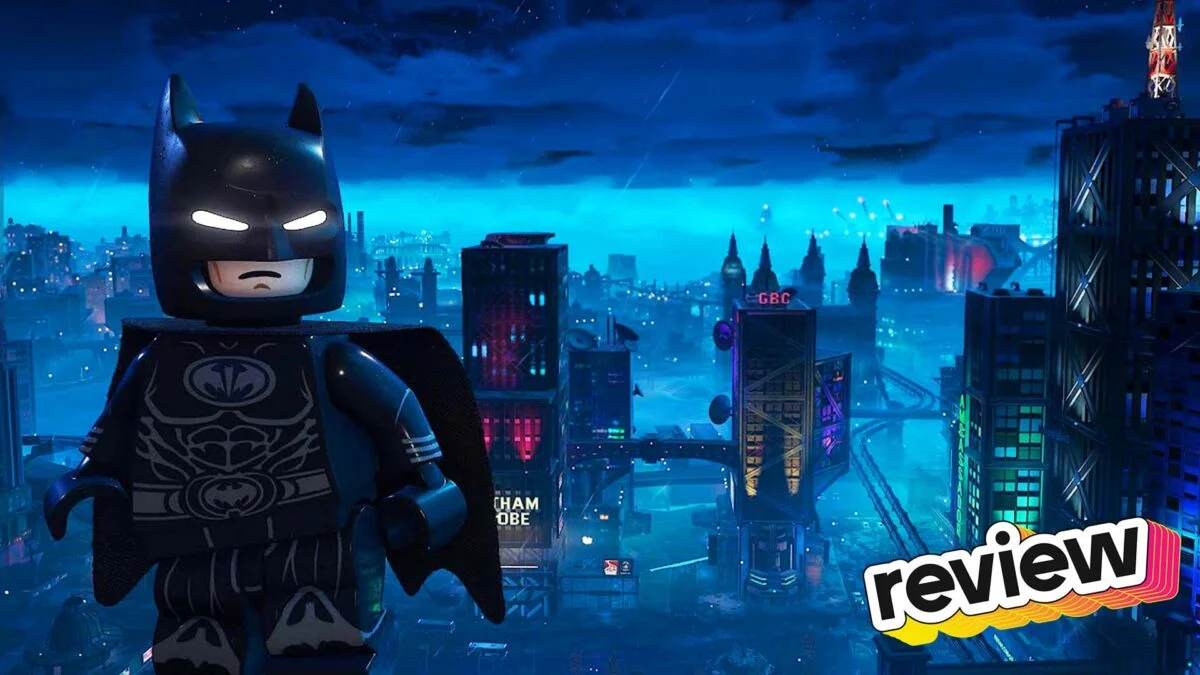
Grab the Cape and Embrace the Night
As someone who grew up in the UK collecting American comic books during the late 1980s, one thing always stood out. Every new issue felt like a portal into a world of absolute madness and endless gimmicks. I’m not even talking about the comic stories themselves. I’m talking about the advertisements splashed across the pages between them. One moment you’d be reading about Batman brooding atop some gothic Gotham skyscraper, and the next you’d be confronted by an enthusiastic pitch for Topps trading cards, Garbage Pail Kids, or the latest Nintendo Entertainment System game. It was impossible to predict what bizarre product would appear when you turned the page.
Lego Batman: Legacy of the Dark Knight Review
Developer: TT Games
Publisher: Warner Bros Games
Platform: Reviewed on PC
Availability: Released May 22 on PC (Steam and Epic Games Store), PlayStation 5, and Xbox Series X/S. Nintendo Switch 2 version arriving in 2026.
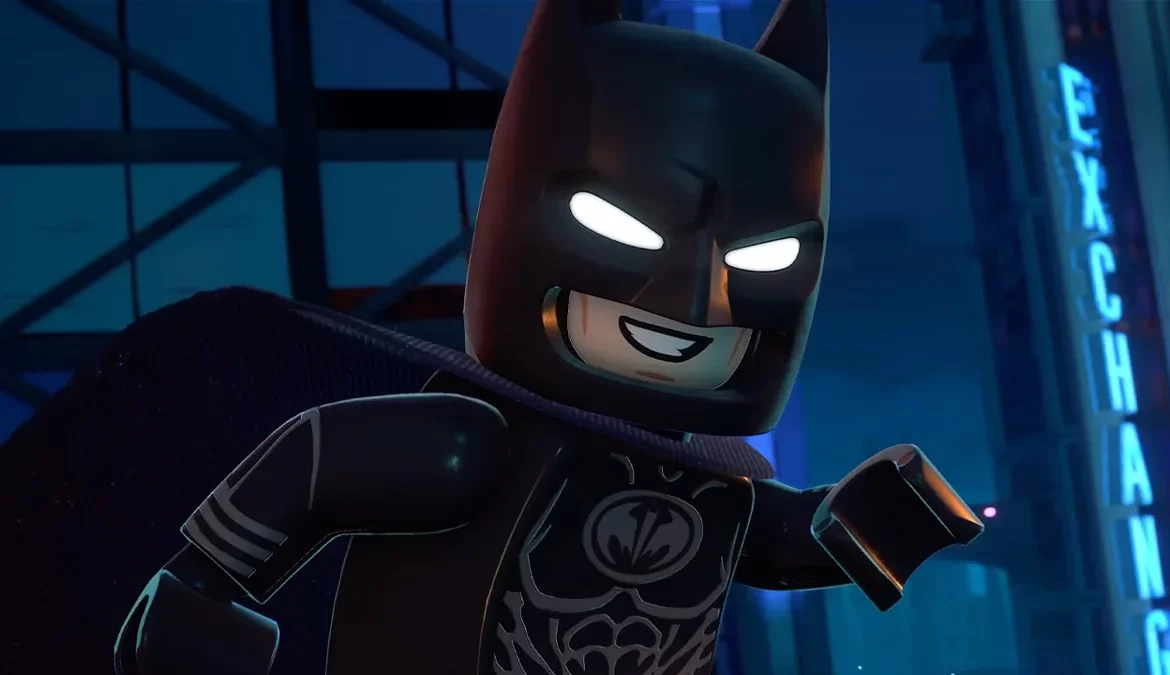
Before going any further, it’s important to clarify something: those advertisements were fantastic. Of course I enjoyed the Batman stories themselves, but I often spent just as much time staring at the ads and imagining the strange consumer wonderland they promised. The endless stream of new ideas, products, promotions, and ridiculous mail-order offers was captivating. The thought of sending cereal box tops away to receive something mysterious felt magical.
And somehow, against all expectations, Lego Batman: Legacy of the Dark Knight captures that exact feeling.
That doesn’t mean the game is packed with advertisements. Granted, any Lego game based on Batman is inherently promotional to some extent, but in a creative and affectionate way. What the game really captures is that sense of unpredictability. Every few moments it seems to forget that it’s supposed to be a Batman game and instead throws in another reference to some completely different corner of popular culture.
A Back to the Future joke? Sure, why not. But then there’s also a nod to American Psycho, a novel that certainly isn’t known for being child-friendly. Eventually I stopped keeping track of all the references. Along the way I encountered tributes to Anton Furst, the visionary production designer responsible for Gotham City in Tim Burton’s 1989 Batman film, as well as references to legendary comic creators Frank Miller and Alan Moore, whose names appear prominently on the side of a skyscraper.
And honestly, that’s part of the game’s charm.
The result is a title that feels energetic, colorful, playful, and constantly surprising. It’s the gaming equivalent of plunging your hand into a giant bucket of Lego bricks and seeing what you pull out. Every corner contains another joke, another collectible, another obscure callback, or another reference that might send curious players down a Wikipedia rabbit hole. Nothing feels off-limits. Everything is fair game.

What prevents all this from becoming overwhelming is the game’s central inspiration.
More than anything else, Legacy of the Dark Knight feels like a Lego interpretation of Rocksteady’s beloved Arkham series. It successfully recreates both the open-world traversal and the signature combat that made those games so memorable. Players can launch themselves around Gotham, rapidly moving between rooftops before gliding across the skyline. Meanwhile, combat embraces a streamlined version of the Arkham Freeflow system, combining counters, dodges, combo attacks, and powerful ultimate abilities into a fast-paced and satisfying rhythm.
The game absolutely loves placing Batman against absurd numbers of enemies. Entire groups surround him, attack indicators appear overhead, and the camera pulls back just enough to give players a complete view of the battlefield. While it may not match Rocksteady’s games blow-for-blow, it captures their spirit remarkably well.
Beyond combat, the mission design remains varied and entertaining.
Story missions guide players through carefully crafted locations filled with battles, bosses, puzzles, environmental challenges, and comedic set pieces. Batman is always accompanied by a sidekick, reflecting the game’s strong emphasis on local co-op play. Each partner comes equipped with unique abilities that are essential for progression.
Catwoman is particularly enjoyable. She can slice through glass barriers, scale walls with ease, and even summon a cat capable of crawling through narrow vents. Robin brings his own utility toolkit, allowing him to connect objects with tethers and force open sealed doors.
Even Commissioner Gordon gets a chance to shine. Armed with a specialized weapon capable of disabling machinery, he contributes far more than comic relief. Nightwing and Talia al Ghul also prove surprisingly useful, with Talia possessing one especially clever ability that is best discovered firsthand.
Batgirl is perhaps the only character who feels slightly less exciting. Her drone can create temporary grapple points, and she carries a gadget used for hacking technology through a dedicated mini-game. While these mechanics are functional, they lack the immediacy and creativity of abilities available to characters like Catwoman or Talia, causing her sections to feel somewhat slower by comparison.
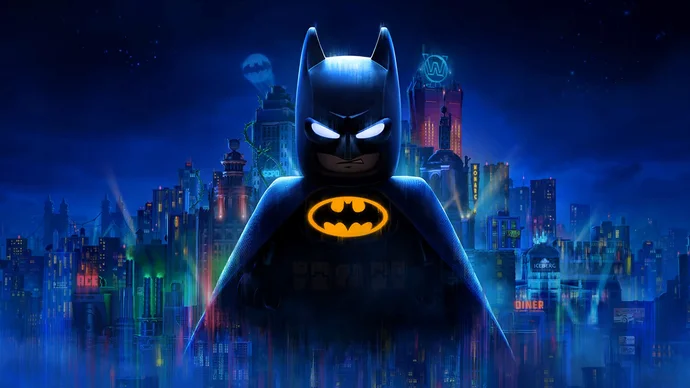
Many missions require players to swap frequently between multiple sidekicks and make strategic use of their unique skills. At the same time, levels are packed with collectibles and hidden items that can be spotted long before they become accessible. Combined with the constant stream of villain appearances, cinematic references, and combat encounters, this creates a steady flow of rewards and discoveries.
That constant activity also helps distract from a reality familiar to longtime Lego game fans: beneath the surface, the core gameplay loop remains fairly simple.
Combat. Puzzle solving. More combat. Smash nearby objects to build an absurdly specific Lego contraption that conveniently opens a door or creates a bridge.
Yet it works.
The reason it works is because every activity is delivered with confidence, humor, and creativity. The formula remains ideal for cooperative play, especially when shared with younger players. Even the simplest objective can become memorable thanks to the unexpected chaos that unfolds along the way.
There are also a few particularly pleasant surprises worth highlighting.
The first is the game’s streamlined Detective Mode. Lego games occasionally struggle with puzzle clarity, sometimes making solutions feel unnecessarily obscure. Detective Mode alleviates that issue by gently guiding players without completely removing the challenge. As a result, moments of genuine frustration are surprisingly rare.
The second surprise involves stealth.
One of my favorite aspects of the Arkham series has always been the Predator sequences, where Batman stalks enemies from the shadows and systematically eliminates them. Legacy of the Dark Knight never reaches that level of depth, but it does include a surprisingly effective stealth system.
Players can disable security cameras, study patrol routes, quietly ambush enemies before they detect them, and disappear back into darkness. These sections are simple compared to Arkham’s elaborate predator encounters, yet they remain enjoyable and provide welcome variety between larger combat scenarios.
Together, these elements create a campaign that feels generous, charming, and deeply affectionate toward Batman’s expansive mythology.
Of course, familiar villains such as Poison Ivy and Two-Face appear throughout the adventure. But the game’s love for Batman extends far beyond the obvious choices. References to Bat-Mite, the Grey Ghost, and numerous obscure corners of Batman history are scattered everywhere.
Players also gain access to an extensive Batcave that can be customized and expanded through collectibles and unlockable content. New suits, decorations, and upgrades provide additional incentives to explore.
Transportation options are equally entertaining. You can patrol Gotham in versions of the Batmobile inspired by recent films, take control of the iconic Tumbler from The Dark Knight, or choose something far more unusual.
Driving itself deserves special mention because the game treats vehicles as optional conveniences rather than mandatory mission mechanics. Unlike Arkham Knight, which frequently forced players into extended vehicle sequences, cars here simply provide another enjoyable way to move around the city whenever gliding through the air becomes repetitive.
Not everything works perfectly.
Occasionally, characters can become caught on environmental geometry around the edges of the Lego world. Collecting Waynetech Caches scattered throughout Gotham is initially enjoyable, but the resulting currency rarely leads to particularly exciting upgrades. Similarly, most skill trees feel relatively uninspired and fail to offer meaningful customization.
There are also moments when the game’s close resemblance to the Arkham series works against it. Certain mechanics inevitably invite direct comparison, and Rocksteady’s versions often feel more refined. The boost grapple from Arkham City, for example, remains one of the most exhilarating traversal mechanics ever designed. Its Lego equivalent performs adequately, but lacks the same exhilarating sense of momentum and power.
Still, these criticisms feel minor when weighed against everything else the game accomplishes.
This is a game overflowing with tiny details that exist purely to entertain, surprise, or trigger memories of comic stories you may not have thought about for decades.
If you follow Batman comics today, you’ll know the character currently exists across several very different interpretations. There’s the darker, horror-inspired Absolute universe written by Scott Snyder. At the same time, Matt Fraction’s current run presents Bruce Wayne as a genuinely warm and compassionate individual, infused with the kind of charm Fraction excels at writing.
In other words, modern Batman offers many different versions of the character.
Then again, perhaps it always has.
That’s the truth at the heart of Lego Batman: Legacy of the Dark Knight. It understands that Batman can be many things at once. Every interpretation matters. Every era contributes something valuable. Every version of Batman has a place here.
And somehow, the game makes all of them fit together perfectly.